Practice Transition: From Audiovisual Landscape to Site-Responsive Drawing
The work presented here traces the development of my practice from interdisciplinary moving image and sound toward drawing as a primary research methodology. Enchantment (2013) marked a pivotal moment in which drawing began to shift from illustrative animation toward an exploratory and investigative process. The current research project, Sensory Encounters: Developing a Site-Responsive Drawing Methodology, builds on this transition.
This research phase focuses on testing and refining drawing processes that are still emerging and not yet fully resolved within my practice
Enchantment (2013) is a 26-minute audiovisual work developed through an interplay between filmed landscape, drawing, animation and sound. Created through slow observation of natural environments, the project explored how sensory encounters with place could generate symbolic and atmospheric visual language.
While rooted in moving image practice, this work marked a significant shift. The drawings, developed in response to filmed landscape, began functioning not simply as character design but as a way of investigating perception, movement and imaginative response to environment. Drawing became a process of translation — testing how environmental experience might be embodied through mark-making.
The current research project builds on this transitional moment by shifting from mediated observation toward direct, site-responsive drawing undertaken through sustained field engagement.
Enchantment was screened at BALTIC Centre for Contemporary Art and later presented through an independently organised outdoor screening in Newcastle upon Tyne, alongside participatory workshops and documentary activity with young people in Byker.
While Enchantment introduced drawing as a key process, the methodological potential of drawing itself remained largely unexplored at this stage.
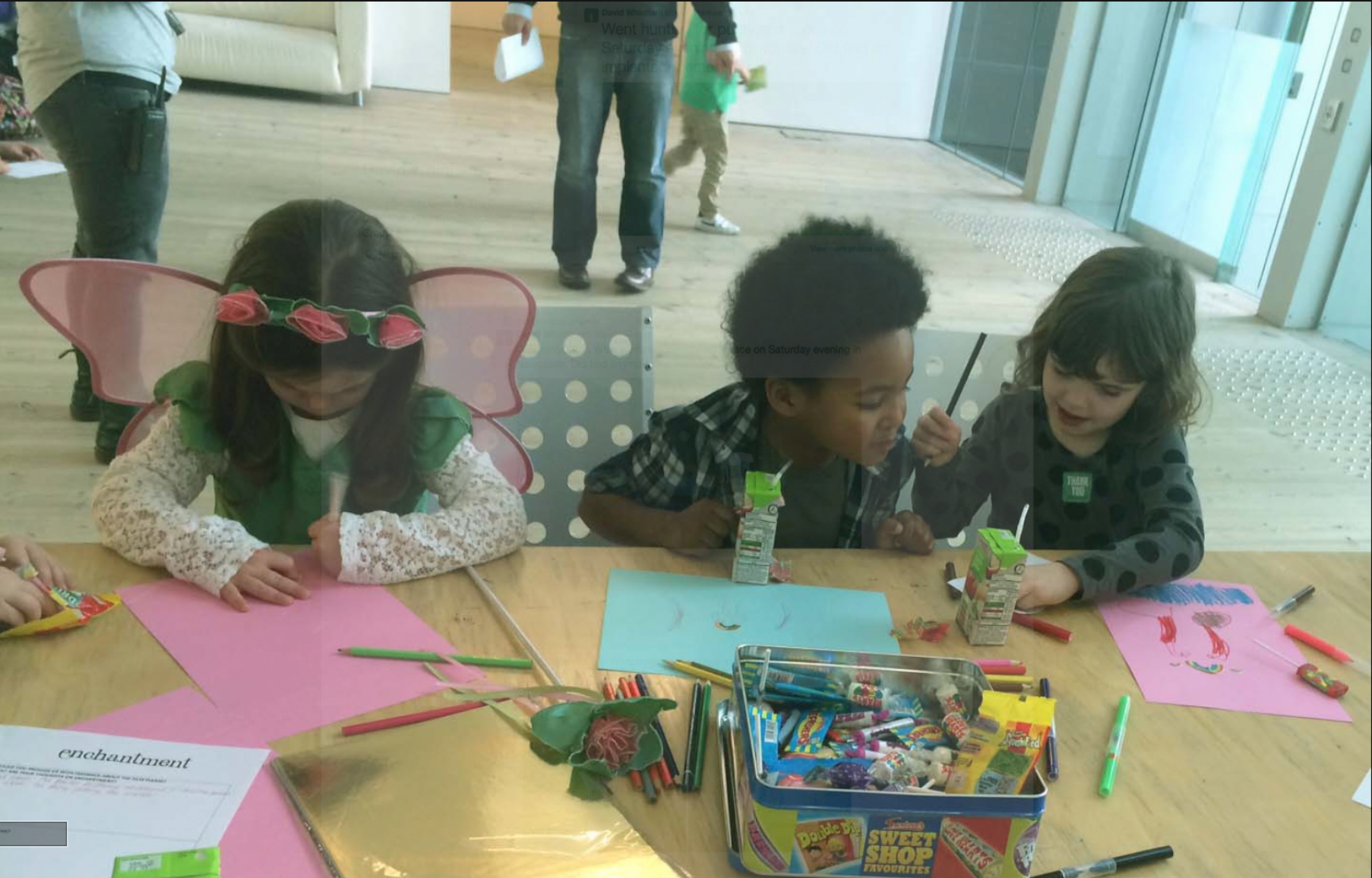
Creative engagement session following the screening of Enchantment at BALTIC Centre for Contemporary Art. Participants explored sensory and imaginative responses to landscape through drawing-based activity, extending the project’s investigation into how environmental experience can be translated through visual process.
Transitional Drawing Studies (2009–2013)
These drawings were developed during the production of Enchantment. Initially serving collaborative animation development, they marked a period where drawing began shifting from preparatory illustration toward exploratory enquiry. Plant structures, gesture and embodied forms became vehicles for investigating relationships between nature, movement and imagination. This stage represents the threshold between figurative narrative and later sensory abstraction.
These drawings were developed during the production of Enchantment. Initially serving collaborative animation development, they marked a period where drawing began shifting from preparatory illustration toward exploratory enquiry. Plant structures, gesture and embodied forms became vehicles for investigating relationships between nature, movement and imagination. This stage represents the threshold between figurative narrative and later sensory abstraction.
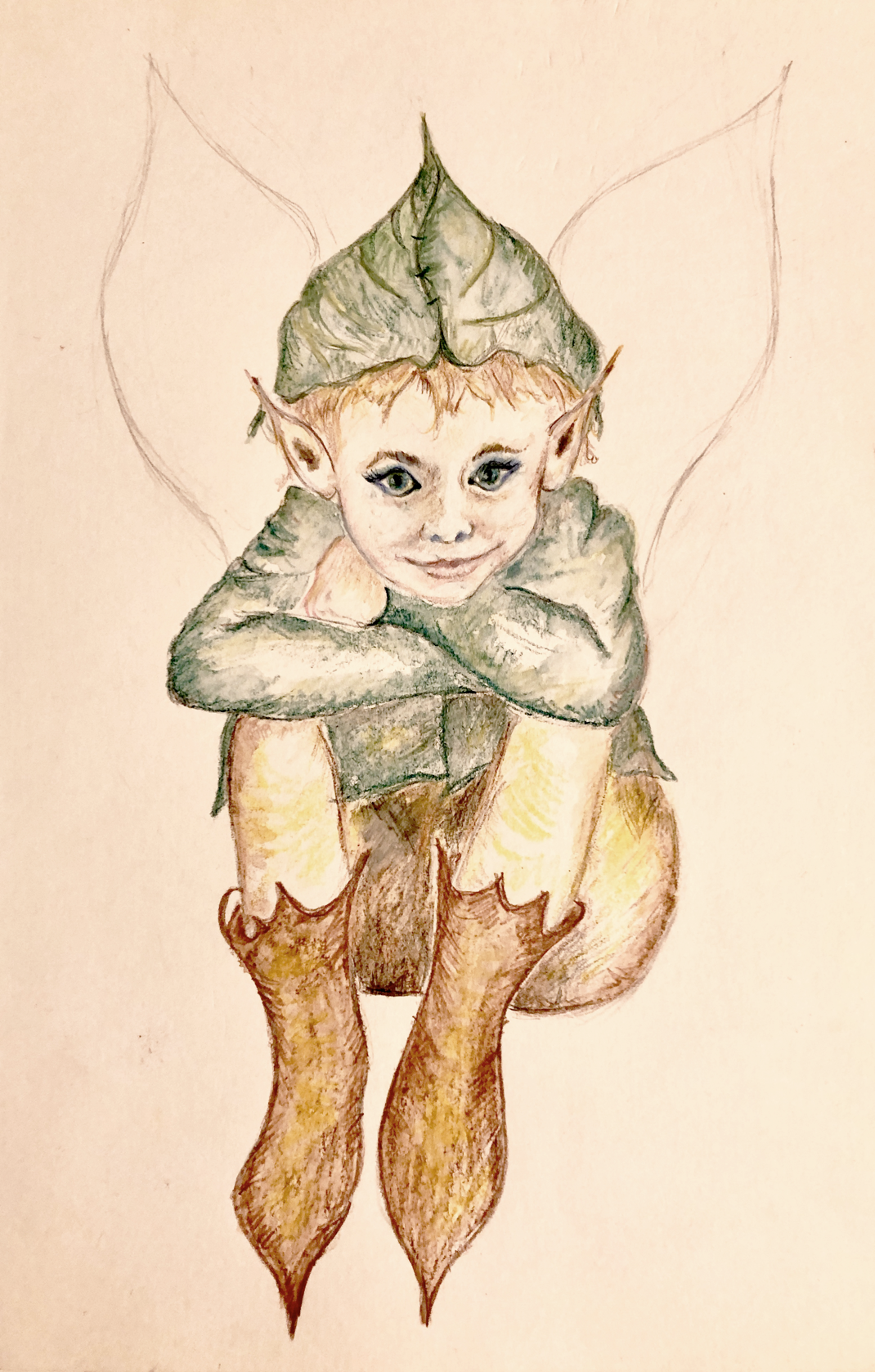
Leaf Figure Study
Watercolour and pencil drawing, 2009
Watercolour and pencil drawing, 2009
Character study exploring the embodiment of plant forms within human figures. Drawing functioned as a visual source material for the collaborative animation development.
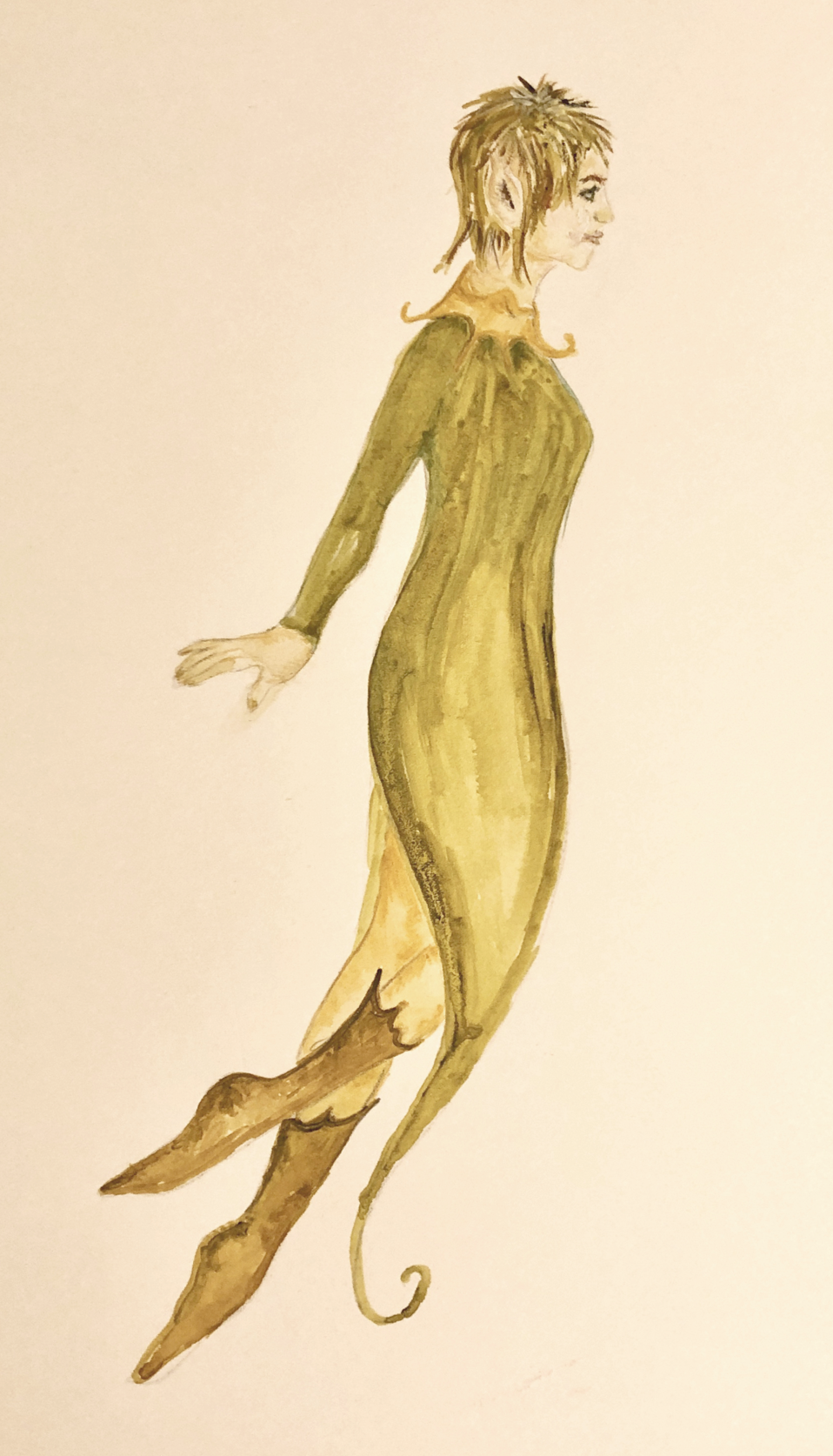
Figure Movement Study
Watercolour drawing, 2009
Watercolour drawing, 2009
Exploration of gesture and costume design developoed for animated sequences. The work reflects drawing's role in translating natural motifs into performative form.
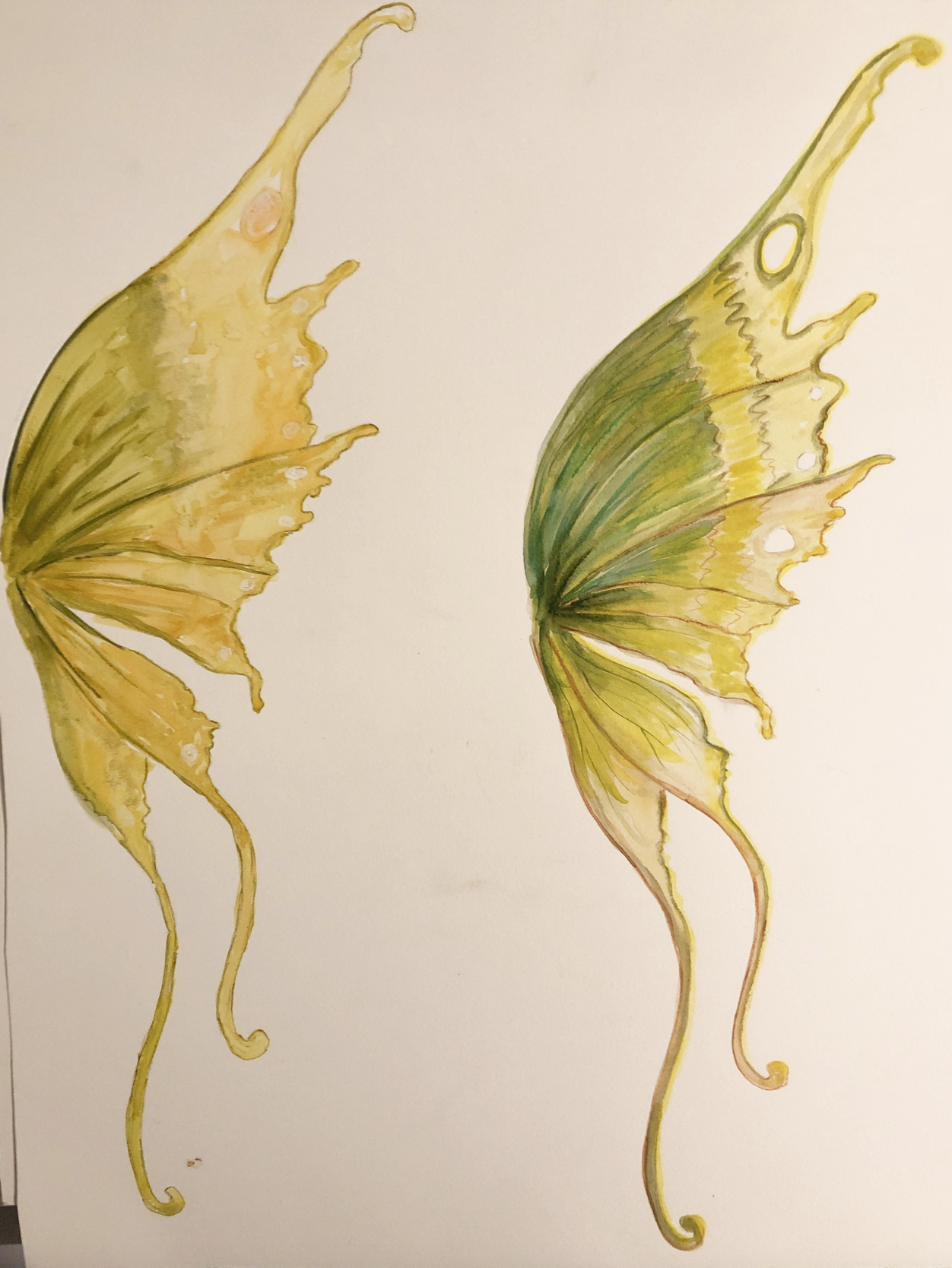
Wing Structure Studies
Watercolour drawings, 2009
Watercolour drawings, 2009
Developmental studies investigating organic wing forms inspired by plant structures. Drawing operated as a process of experimentation supporting animation design.
Emergence of Site-Responsive Drawing (2023–2025)
These works document the early development of a site-responsive drawing methodology. Drawing functions as investigation rather than representation, testing how observation, movement, atmospheric perception and material behaviour can generate visual language. The research shifts from figurative translation toward embodied engagement with landscape structure, ecological detail and environmental rhythm. These studies form early tests toward a repeatable site-responsive methodology currently under development.
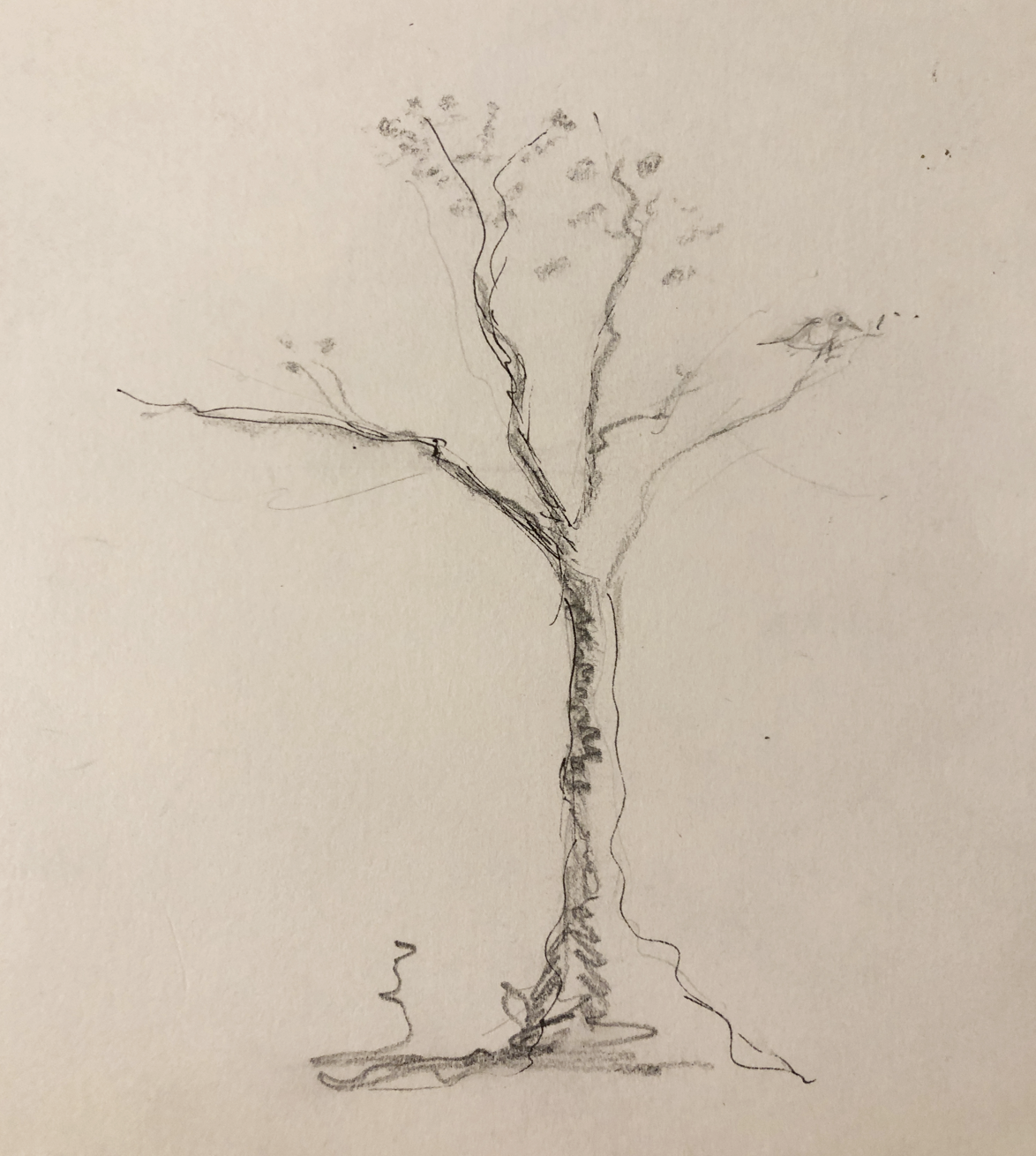
Tree Observation Study
Graphite and pen drawing, 2023
Graphite and pen drawing, 2023
Direct observational study focusing on balance, growth and structural movement within a tree form. The drawing develops sesitivity to an environmental gesture through sustained looking.
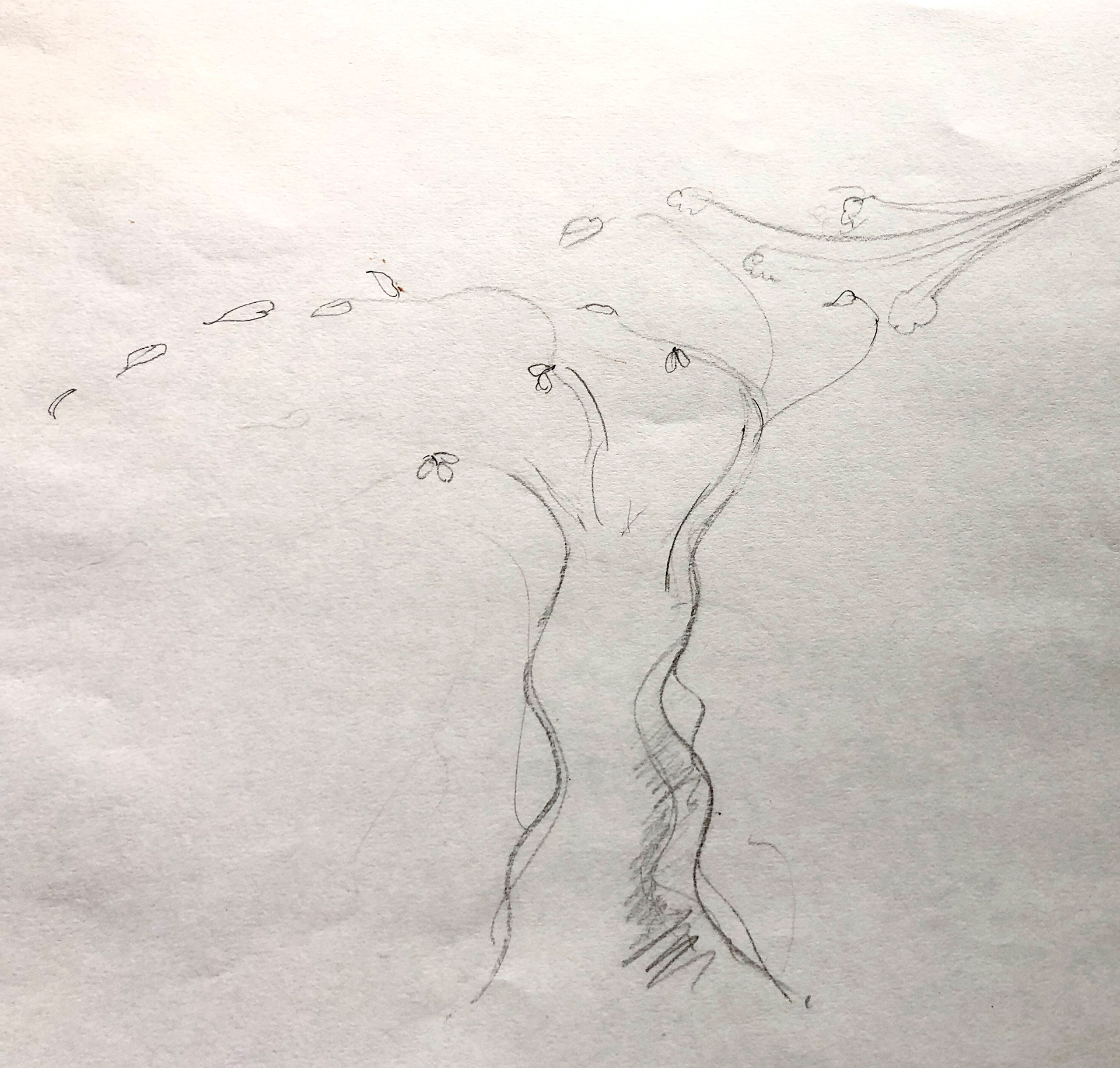
Wind Movement Study
Graphite drawing, 2023
Graphite drawing, 2023
Investigation into translating atmospheric movement into line and rhythm. Marks emerge from sensing environment motion rather than descriptive representation.
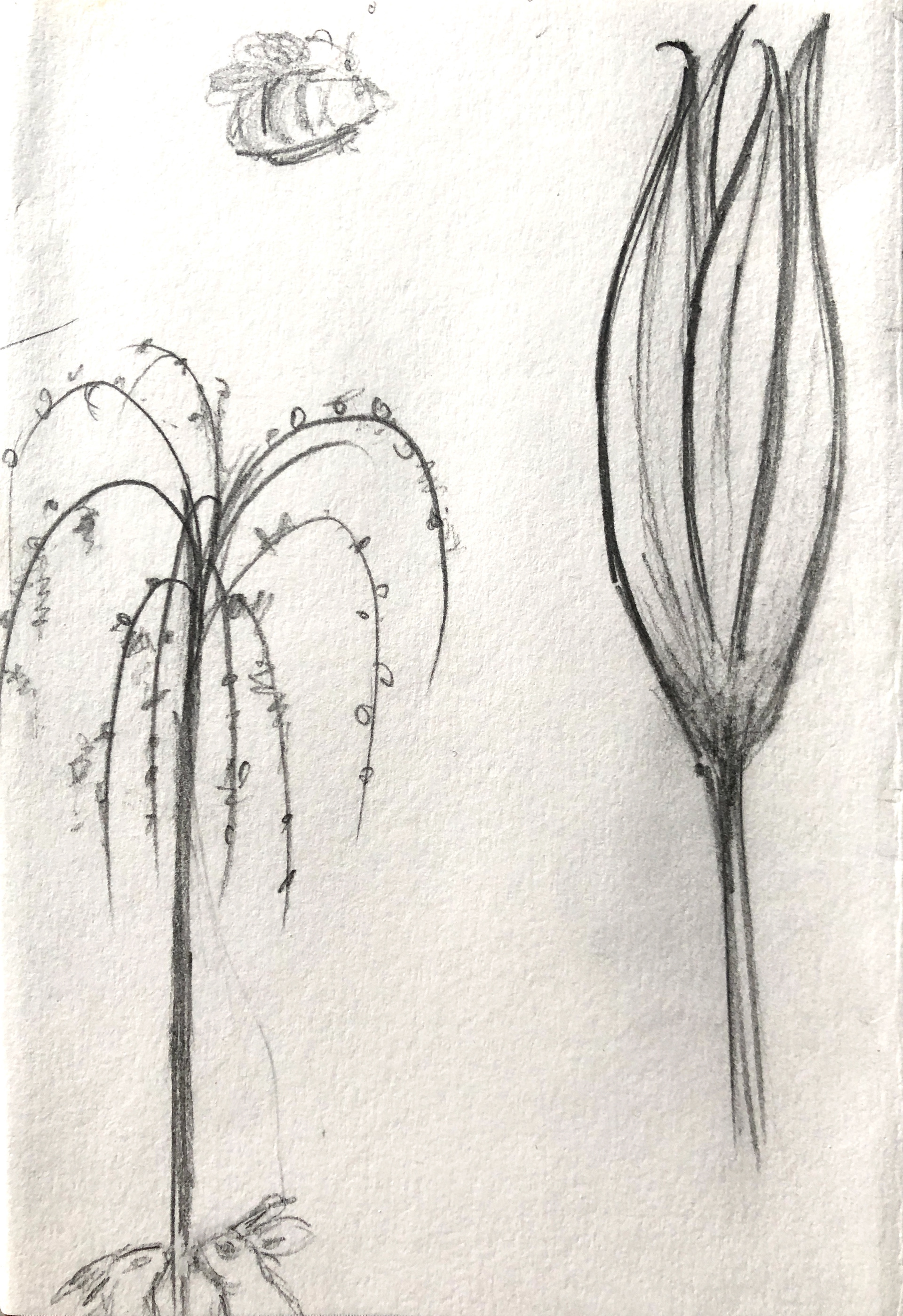
Plant Observation Study
Graphite drawing, 2024
Graphite drawing, 2024
Investigation into plant structures exploring relatinships between fragility, growth and ecological detail. Drawing functions as a tool for attentional study.
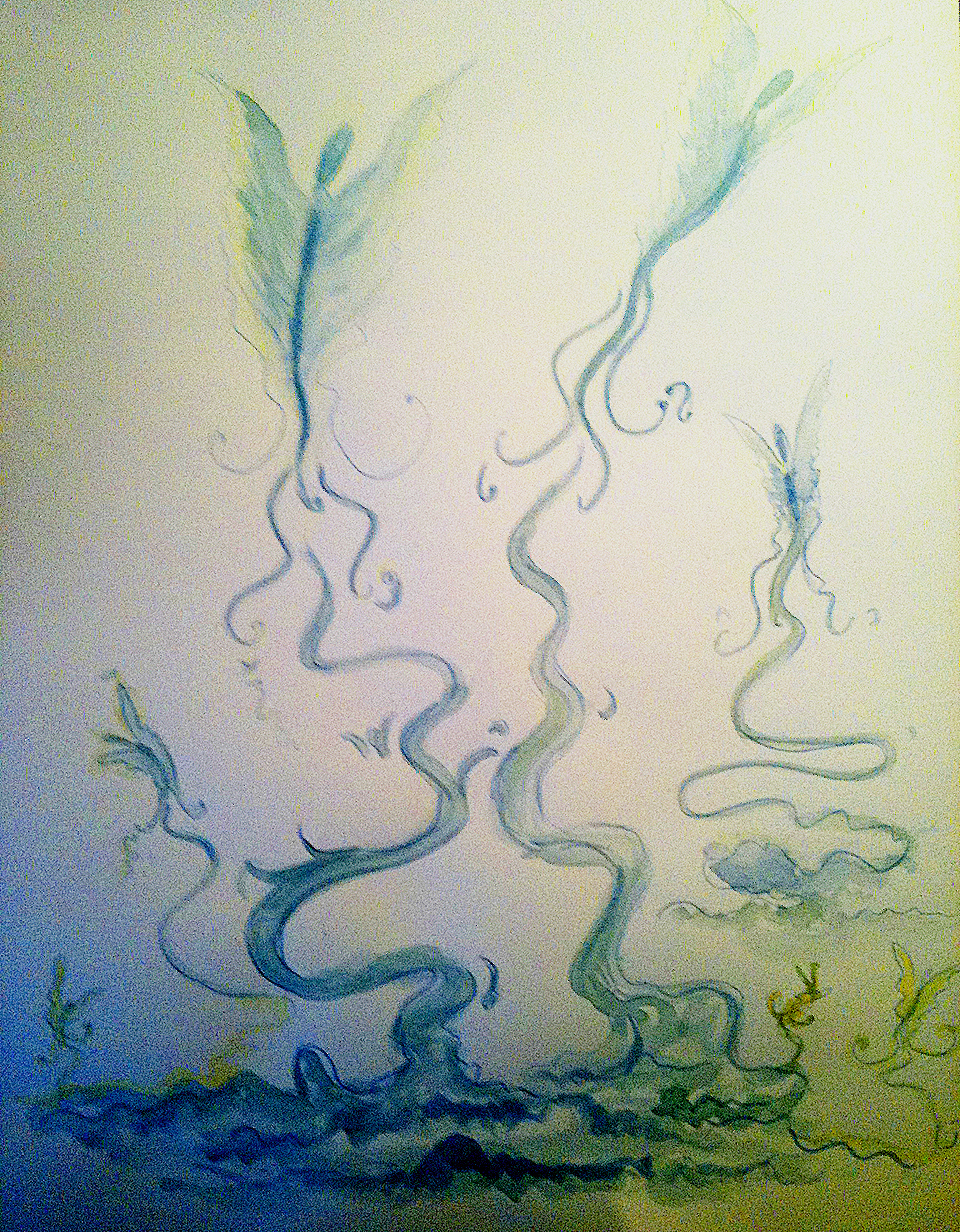
Water Movement Study
Mixed media drawing, 2024
Mixed media drawing, 2024
Experiment exploring fluid movement and transformation through gesture and form. The drawing tests how water dynamics can be embodied though material response.
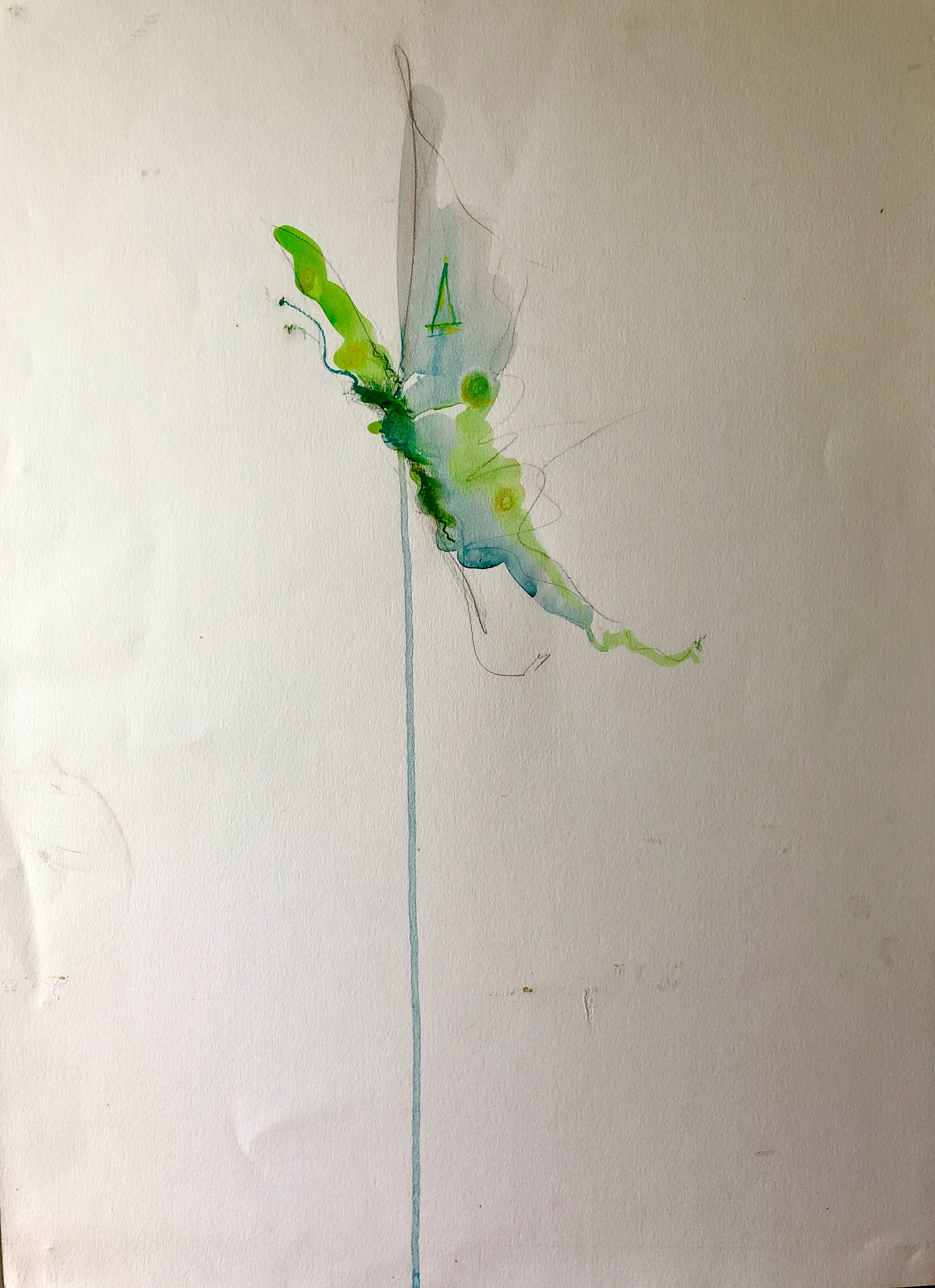
Material Gesture Study
Watercolour and graphite, 2024
Watercolour and graphite, 2024
Exploration of spontaneious mark-making and material interaction. Gesture is used to investigate how movement and sensation can generate emerging forms.
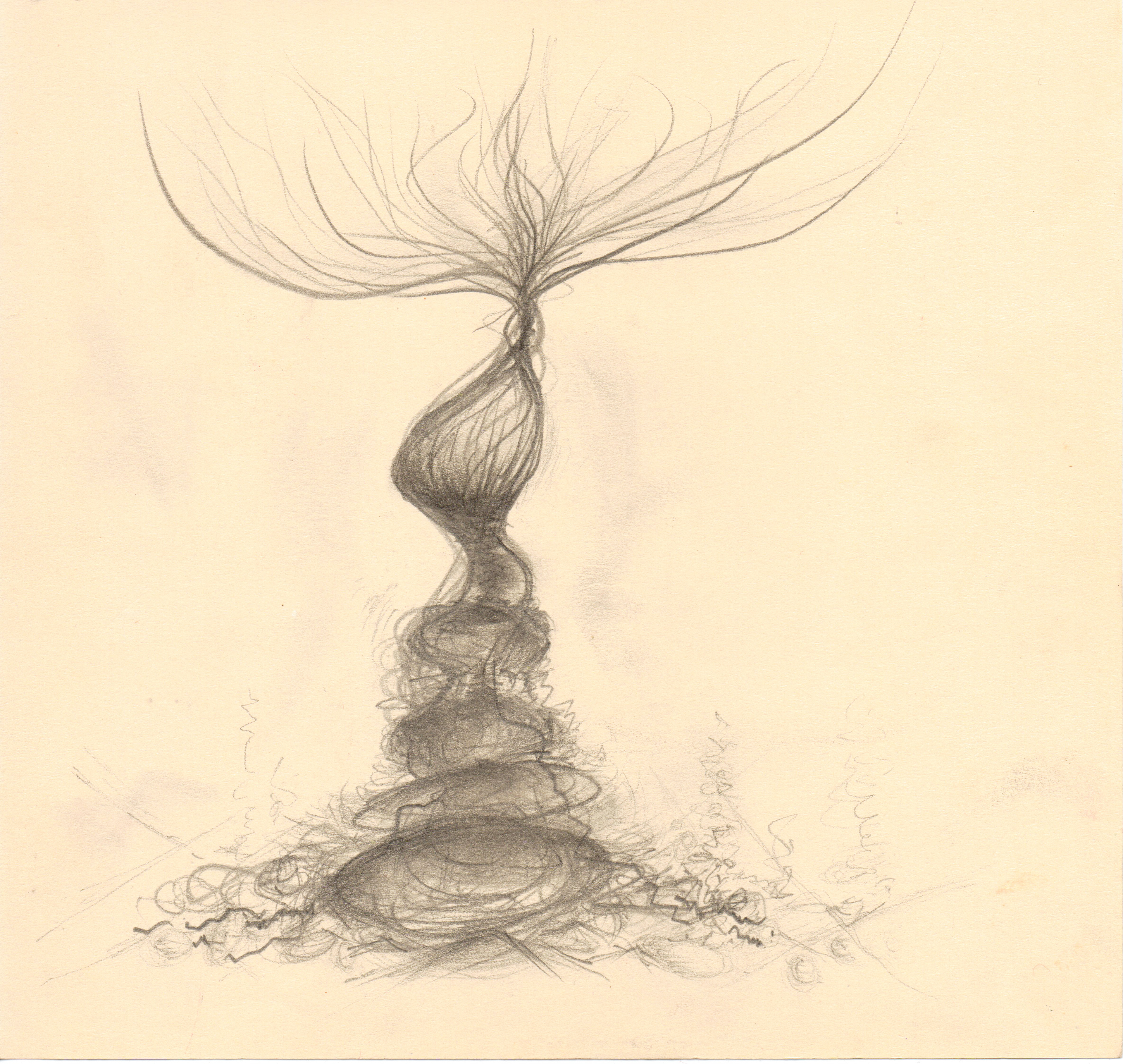
Earth Energy Study
Graphite drawing, 2023
Graphite drawing, 2023
Investigation into ground energy and spatial tension within landscape forms. Drawing used to explore connections between geological structure and bodily perception.
Earlier Atmospheric Practice 2006-2009
Earlier interdisciplinary works explored atmosphere, light and environmental energy through painting and moving image. These investigations established a sustained interest in sensory engagement with landscape, which now culminates in drawing as a primary research method.
Earlier interdisciplinary works explored atmosphere, light and environmental energy through painting and moving image. These investigations established a sustained interest in sensory engagement with landscape, which now culminates in drawing as a primary research method.
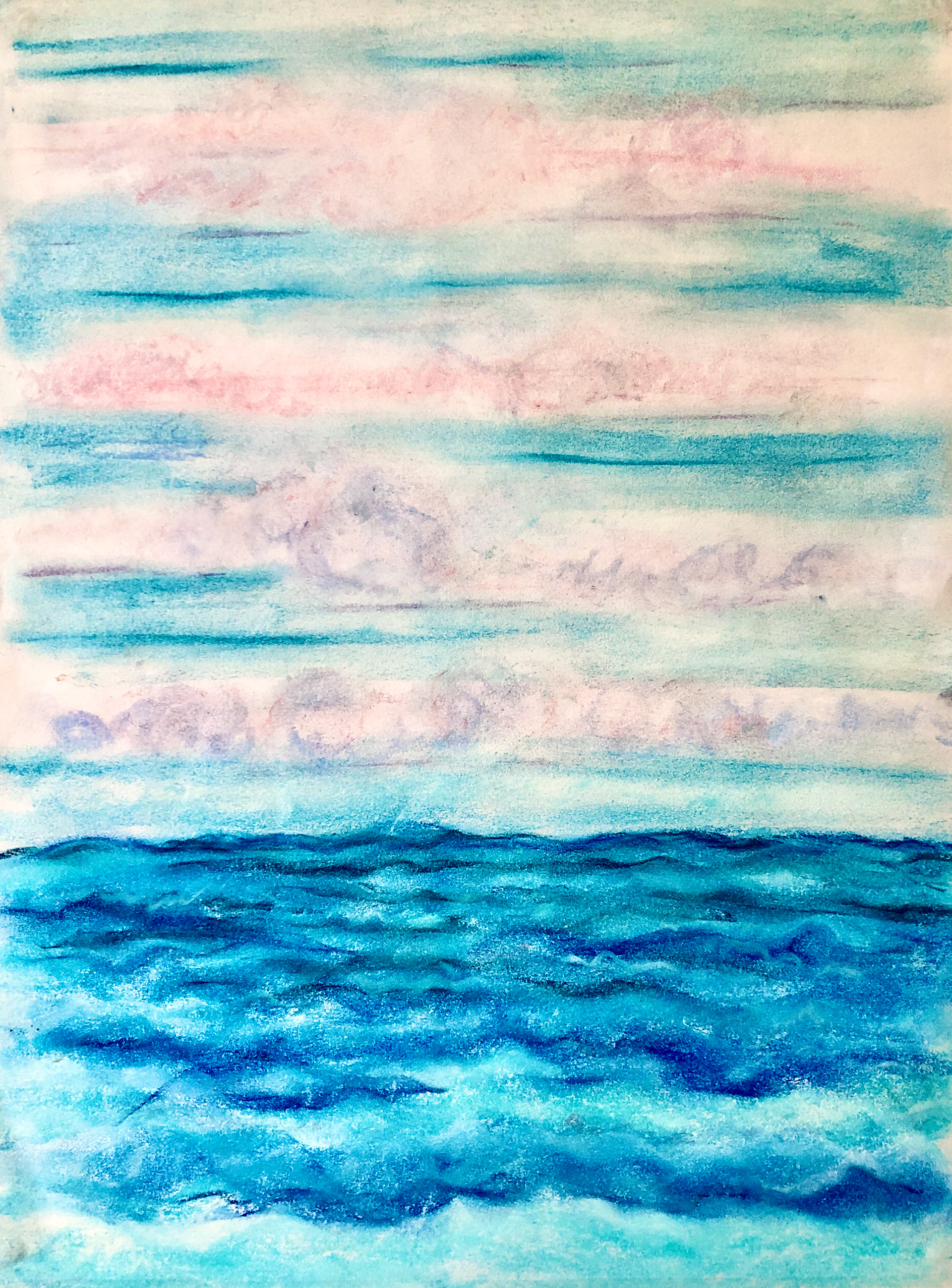
Horizon Study (Sea Atmosphere)
Chalk pastels, 2006
Chalk pastels, 2006
An early exploration of horizon, atmosphere and spatial perception. The work investigates how colour gradients and rhythmic mark-making can translate sensory encounters with landscape into visual form, foreshadowing later site-responsive drawing research.
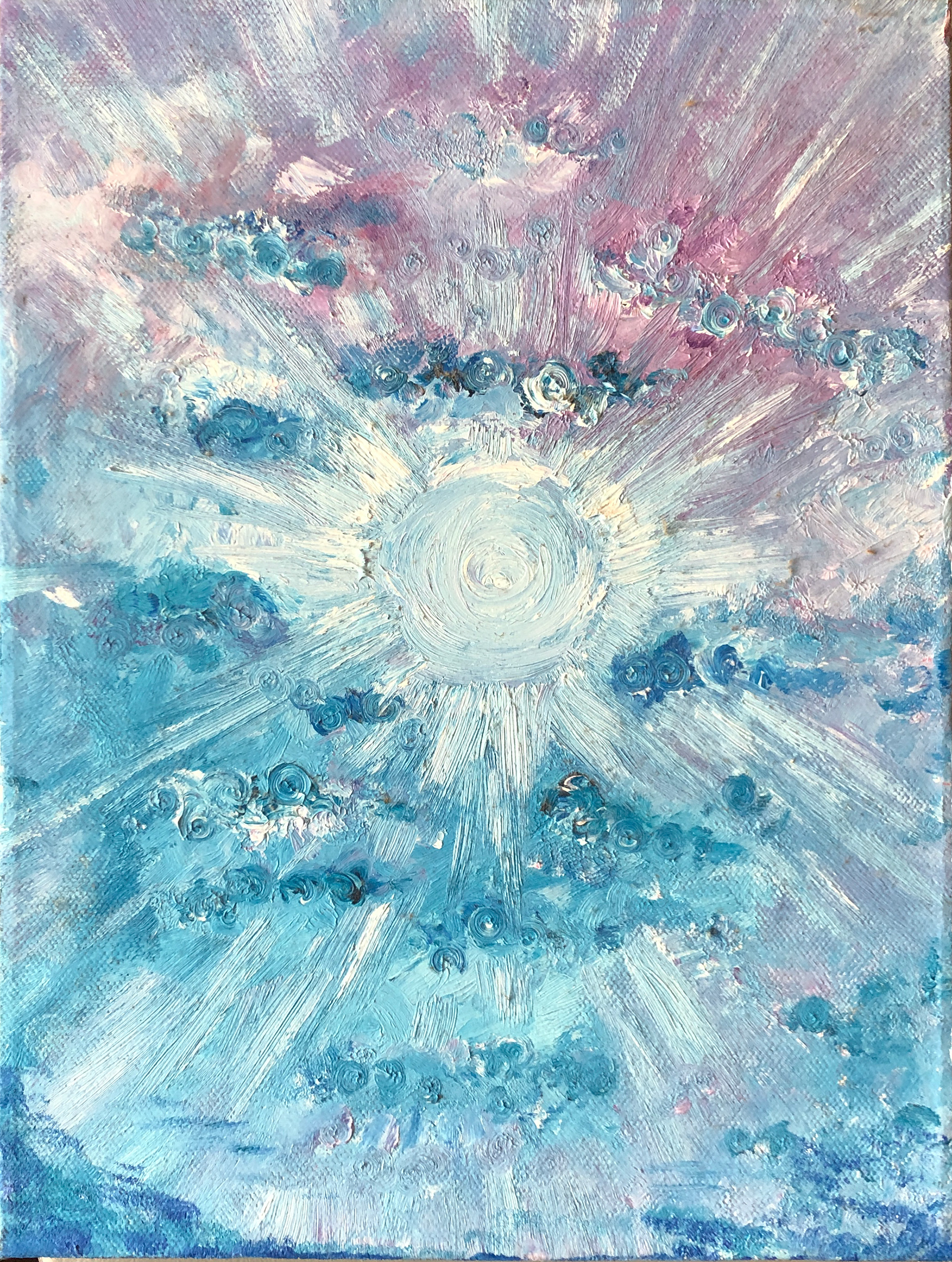
Cloudburst (Atmospheric Study)
Acrylic on canvas, 2009
Acrylic on canvas, 2009
This work explores atmospheric energy through colour, movement and light. Gestural mark-making responds to environmental sensation rather than representational landscape, anticipating later investigations into drawing as a sensory and embodied process.
Together, these works demonstrate a continuous exploration of environment, atmosphere and embodied perception across disciplines. The current project, Sensory Encounters, formalises this trajectory by establishing drawing as a sustained, research-led methodology that will be further tested and articulated through the proposed R&D period